
Digital Digest
Marketing Intelligence Weekly

Weekly updates on the digital marketing news you need to know, including data reform, AI, cookie deprecation and platform updates.

AI in digital
Platforms
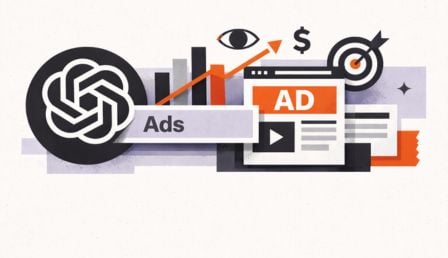
Update on ChatGPT ads
- OpenAI is rolling out ads in ChatGPT — the company has started introducing ads to users of the free and Go subscription tiers in the U.S. market as part of a broader shift toward monetisation.
- COO Brad Lightcap says this will be “an iterative process” — emphasising that the company wants to get it right, particularly around user trust and privacy.
- Lightcap noted that if ads are done right, they “can be additive to a product experience”, but he also acknowledged it will take time and asked people to “give us a few months” to evaluate how this goes.
- He didn’t discuss plans for expanding ads beyond the U.S. at this stage.
- Read more
AI in digital
Platforms
Google has patented AI-generated landing pages
- A recently granted patent describes a system where Google could generate a custom AI page for a search query rather than sending users directly to a traditional website URL.
- The system would use the user’s query (and potentially context) to build a dynamic page tailored to intent — for example, pre-filtered product results instead of a generic category page.
- Importantly, this is patent speculation, not an announced or implemented feature in Google Search right now.
- Even if not deployed soon, the patent hints at how Google could blend AI content and search results more deeply going forward.
- Read more

AI in digital
Platforms
Microsoft rolls out mitigations to thwart AI recommendation poisoning
- Microsoft has moved to stop prompt injection attacks that were being used to bias AI outputs by tricking models into favouring specific companies or responses when users clicked “Summarize with AI” buttons.
- These attacks — dubbed “AI Recommendation Poisoning” — embed hidden commands in URLs to make the AI assistant remember or prefer certain companies, subtly skewing future replies on everything from health to finance.
- Microsoft says the technique worked not just against Copilot but also ChatGPT, Claude, Perplexity, Grok and others, showing the broad nature of the threat.
- The company is rolling out ongoing mitigations and protections to detect and block these injections, as part of a larger push to protect AI models from manipulation.
- Read more
AI in digital
Platforms
Perplexity announces “Computer” AI workspace
- Perplexity launches “Computer”, a new AI-powered digital worker that goes far beyond simple chatbot responses, able to carry out complete workflows, from researching to coding and managing projects autonomously.
- It orchestrates multiple specialised AI models (around 19), routing tasks to the best model for the job, meaning research, design, app builds or analysis happen in one place rather than across many tools.
- End-to-end execution is the big differentiator, with Computer breaking large goals into sub-tasks and running them in the background over long periods (hours to months).
- Available now to paid subscribers, it’s positioned as part of Perplexity’s strategy to move from search answers into full project output, potentially streamlining workflows for developers and teams.
- Early buzz and experiments highlight real-world potential, from building apps to complex analytics, but also spark debate about limitations vs traditional tools.
- Read more
Marketing by numbers
Platforms
Gen Z’s love of TikTok is cooling, with preferred search providers changing
- Gen Z’s stated preference for TikTok over Google has halved — only about 4% of Gen Z now say they’re more likely to rely on TikTok than Google for search, down from 8% previously.
- TikTok use for search still widespread, with 49% of U.S. consumers saying they’ve used TikTok as a search tool, but that doesn’t mean they prefer it over traditional search engines.
- ChatGPT is emerging as a broader challenger, with 14% of all consumers saying they’d rather use ChatGPT than Google for search — double the share for TikTok.
- Google remains dominant when users are asked which platforms are most helpful for search, far ahead of TikTok and other alternatives.
- Business investment in TikTok marketing is cooling, with fewer small business owners planning to increase spend on affiliate marketing and challenges persisting in converting engagement into sales.
- Read more
Platforms
New no-code MMM planning tool from Google
- Scenario Planner lets marketers create and test budget scenarios and forecast ROI without needing data science skills or code. It uses Google’s Meridian Marketing Mix Model under the hood to turn complex analytics into real results you can act on.
- Unlike traditional MMM that mostly looks backward, Scenario Planner lets teams play with “what-if” budget allocations, simulate future spend outcomes and stress-test strategies before committing dollars.
- Insights are visualised clearly so marketers can quickly see projected ROI and efficiencies across channels, making it easier to optimise spend and justify decisions.
- Historically, MMM outputs were hard to operationalise without analytics expertise; Scenario Planner aims to close that gap so more organisations can make data-driven budget decisions.
- Read more
AI in digital
Platforms
Google is redesigning how links show up in AI search summaries
- In both AI Overviews and AI Mode, groups of source links will now display in a hover-activated pop-up on desktop with site names, favicons and short descriptions.
- Link icons will also be more prominent across both desktop and mobile AI responses to encourage users to click through to original content.
- Google says this new UI makes it “more engaging” and helps users access content across the web more easily, though it’s part of ongoing experimentation.
- The update is part of industry pressure around AI summaries reducing traditional link clicks — past data showed a notable drop in organic CTR when AI Overviews were present.
- Google has been iterating on link visibility over the past year, signalling it sees citation display as a design challenge to keep refining.
- Read more
AI in digital
Platforms
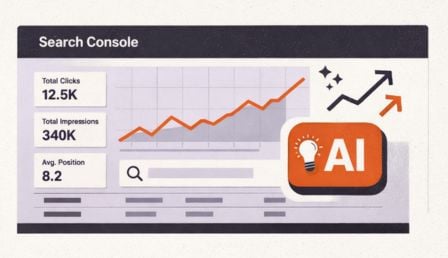
New AI feature in Google Search Console now live for everyone
- Google has officially rolled out the AI-powered configuration tool in Search Console’s Performance report, letting you ask natural-language questions and get instantly configured reports instead of doing manual setup.
- Instead of choosing filters, metrics, comparisons, and date ranges yourself, you can tell the AI what you want to see — it applies the right settings for you.
- The feature can handle metrics like clicks, impressions, average CTR and average position plus filters by query, page, country, device, search appearance and date.
- It currently only works in the Search results Performance report (not Discover or News), and because it’s AI, double-check the filters it applies before making decisions.
- This rollout reflects a trend toward more conversational, AI-assisted SEO analysis — reducing technical friction and letting teams focus more on insights.
- Read more
AI in digital
Platforms
ChatGPT has English bias, searching in English when you don’t
- ChatGPT often leans on English sources even for non-English queries: Peec AI’s analysis of over 10 million ChatGPT searches shows nearly half of the background research queries (fan-outs) are conducted in English, even when the original question was asked in German, Spanish, Polish, etc.
- Local brands can become invisible: Because those English background searches tend to surface global and English-language sources, dominant local companies in non-English markets often don’t appear in ChatGPT’s answers, even for relevant local queries.
- Majority of non-English prompts still include English fan-out steps: Across languages examined, most non-English prompt sessions included at least one English background search, meaning this isn’t an isolated quirk but a widespread pattern.
- Implications for AI visibility strategies: Marketers targeting non-English audiences should consider how AI systems’ reliance on English sources affects brand visibility and potentially adapt AI visibility optimisation — not just traditional SEO — to ensure local relevance is reflected.
- Read more
AI in digital
Platforms
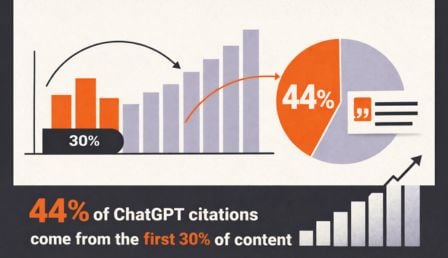
Majority of ChatGPT citations come from the first 30% of content
- ChatGPT heavily favours the top of the page. 44.2% of citations come from the first 30% of content, meaning intros carry disproportionate weight — get your key insights and positioning up front.
- Burying key points reduces citation chances. Only 31.1% of citations come from the middle 40% of text, making deeply embedded product features ~2.5x less likely to be referenced.
- Conclusions still matter. 24.7% of citations come from the final third, especially summary-style sections just before the footer — but actual footers are largely ignored.
- The pattern is statistically rock solid. Analysis of 18,012 citations (validated across batches from 1.2M total) shows a consistent “ski ramp” distribution favouring top-loaded content.
- Within paragraphs, depth beats position. 53% of citations come from the middle of paragraphs — ChatGPT looks for the sentence with the highest information value, not just the first line.
- Read more

AI in digital
Platforms
Anthropic announces Claude Sonnet 4.6
- Claude Sonnet 4.6 is Anthropic’s most capable Sonnet-tier model yet, with smarter coding, enhanced computer use, stronger long-context reasoning, better agent planning, and improved output quality across design and knowledge work.
- The model introduces a 1 million-token context window (beta), letting it ingest entire codebases, complex documents or lengthy research in one go — a big deal for deep execution and long-term planning.
- Benchmarks show Sonnet 4.6 approaching or even matching flagship Opus 4.6 on many real-world tasks (coding, office workflows, agentic use) while staying at Sonnet-level pricing — a cost-effective choice for heavy users.
- It’s now the default model across Claude.ai and Claude Cowork for both free and paid plans, and accessible via API and cloud partners — meaning broad availability without extra pricing.
- Anthropic reports stronger resistance to prompt injection attacks and overall safer behaviour compared to prior Sonnet versions.
- Read more
Platforms
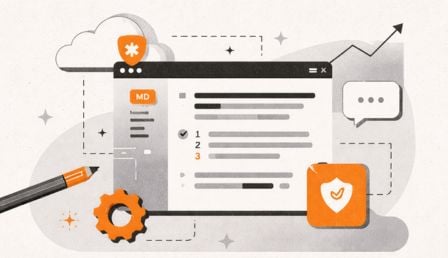
Cloudflare Launches Markdown for Agents Feature
- Websites can now serve content in markdown to AI agents.
- This avoids manual HTML parsing by AI systems.
- It reduces token usage and improves processing efficiency.
- The conversion happens automatically at the network level.
- It reflects a shift towards building for AI consumption, not just traditional search.
- Read more
AI in digital
The first AI Platform to Offer An Official Report
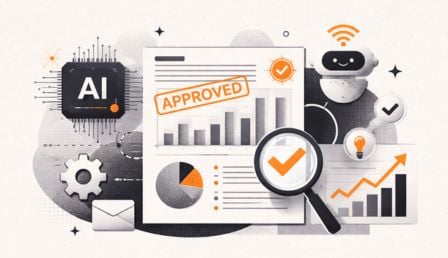
- Bing Webmaster Tools has introduced an AI Performance report in public preview, showing how often your site is cited in AI generated answers.
- The dashboard tracks citations, pages referenced and the queries that trigger AI mentions.
- This signals a shift towards measuring visibility within AI answers, not just traditional search rankings.
- Read more
AI in digital
AI in travel
Chatbot Retargeting Comes to AI Search
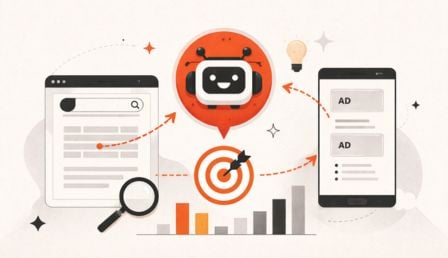
- Evertune has introduced a way for brands to retarget users after they interact with AI answer engines.
- Ads are served on websites users visit after clicking through from a chatbot session, capturing high intent traffic.
- The approach uses contextual and probabilistic targeting, signalling that traditional digital tactics are moving into AI search environments.
- Read more
AI in digital
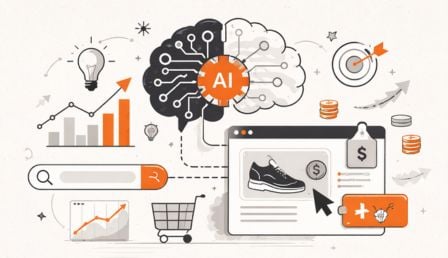
AI Is Reshaping Paid Search and Shopping Ads Strategy
- Google is testing Shopping ads inside AI search results, meaning products may appear within conversational responses rather than only on traditional results pages.
- Microsoft has released guidance on how brands can show up in AI driven search, stressing the importance of structured and clearly organised content.
- Google suggests keywords are no longer the main driver of strategy, with greater emphasis now placed on intent, automation and overall business goals.
- Overall, AI is reshaping paid search, reducing manual control and pushing advertisers to adapt to smarter, more automated systems.
- Read more

Platforms
Google Ads Shows Product Eligibility Across Campaigns
- Google Ads now displays product eligibility across campaigns directly in the Products section status column.
- Advertisers can quickly see where products are eligible or restricted without switching between multiple views.
- The update improves visibility across Shopping and Performance Max campaigns, helping reduce confusion and save time.
- Read more

Marketing by numbers
Platforms
What Super Bowl 2026 Ads Tell Us About Brands Right Now
- Super Bowl 2026 leaned heavily into humour, nostalgia and celebrity power, with brands playing it safer amid economic uncertainty rather than pushing bold, experimental ideas.
- AI-themed ads were present but more subtle, focusing on everyday usefulness rather than futuristic hype - signalling a maturing approach to AI storytelling.
- Big wins came from brands that nailed cultural relevance, timing jokes and references to current internet and pop-culture moments.
- Social buzz mattered as much as airtime, with brands optimising for shareability, memes and post-game conversation, not just the TV spot itself.
- Industry reaction suggests the Super Bowl remains unmatched for scale, but ROI expectations are shifting toward multi-channel impact, not just one night.
- Read more
Platforms
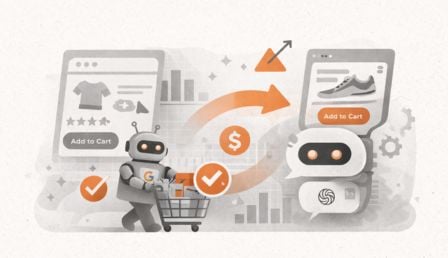
How Do You Compete in Agentic Commerce?
- Agentic commerce means AI agents now research, compare and buy products for users, shrinking the traditional funnel.
- Visibility shifts from humans to machines, if AI agents can’t easily understand or trust your product data, you won’t be considered.
- Structured, accurate product data is the new competitive edge, not marketing arbitrage or growth hacks.
- Brands need to optimise for AI agents as much as people, with clean feeds, strong signals and frictionless checkout paths.
- Read more

AI in digital
AI Search Visibility Is Built on Technical Credibility
- AI trust signals are the credibility cues LLM-powered search systems use to decide which brands to include and cite in AI-generated answers, not just rank.
- They fall into three core areas: entity identity, evidence and citations, and technical & UX health.
- Strong trust signals don’t guarantee AI visibility, but they make it possible for systems like ChatGPT, Google AI Overviews, or Perplexity to reference your brand.
- The article includes a practical audit framework to help marketers assess and strengthen these signals.
- Read more
Platforms
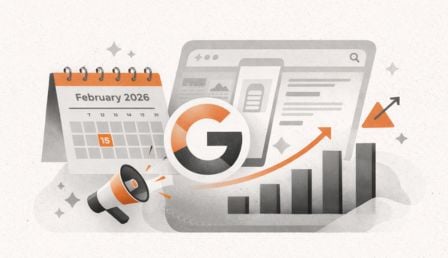
February 2026 Discover Core Update From Google
- Google has launched a new core update focused specifically on the Discover feed, the first core update designed to impact Discover rather than traditional Search rankings.
- The rollout began on February 5, 2026 for English-language users in the US, with global expansion expected over the coming weeks.
- The update aims to improve Discover by prioritising locally relevant content, reducing clickbait, and rewarding in-depth, original, and timely work with clear expertise.
- Publishers that rely heavily on Discover may see visibility and traffic fluctuations as the update rolls out. Standard core update guidance still applies: focus on high-quality content and real user value, not tactics.
- Read more
AI in digital
Platforms
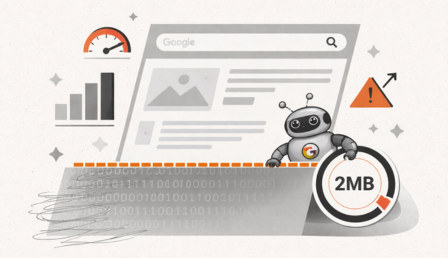
Googlebot Now Crawls Only the First 2MB of Your Page
- Googlebot now crawls only the first ~2MB of a page for Search, down from the previously referenced ~15MB, meaning anything beyond that may not be crawled or indexed.
- This mainly impacts large, complex pages (heavy HTML, inline scripts, bloated templates), where important content could sit below the crawl cut-off.
- The change likely reflects cost-saving measures by Google, especially as AI Overviews and AI Mode increase compute costs.
- It may also hint at how AI search consumes smaller “chunks” of content, rather than fully processing long pages.
- SEO takeaway: Keep key content early in the HTML and reduce page bloat, especially critical for large or enterprise sites.
- Read more
AI in digital
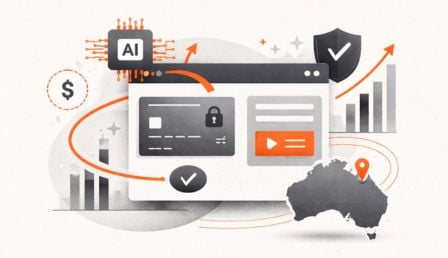
First AI-led purchases have gone through in Australia
- An autonomous AI agent successfully used a CBA debit card to buy Event Cinemas tickets and book accommodation in Thredbo, showing agentic commerce is now live in Australia.
- Mastercard says this shift could profoundly change consumer behaviour and is investing in regional teams and frameworks to support secure, transparent AI transactions.
- Aussies are primed to use AI for buy triggers, with nearly half using AI for online product searches and a majority trusting AI recommendations, according to recent surveys.
- Some platforms are resisting by blocking or restricting AI bots and agents, with companies like eBay explicitly banning automated purchasing without human review, signalling tension between innovation and control.
- While many see AI agents as a convenience boost, others worry about data scraping, competitive impacts and how brands balance AI advantages with customer trust.
- Read more
AI in digital
Platforms
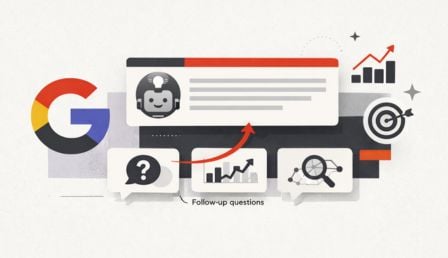
Follow-up questions in AI Overviews now go directly to AI Mode
- Google now connects follow-up questions in AI Overviews directly to AI Mode, letting users jump straight into a conversational back-and-forth from the summary at the top of search results.
- Google’s Gemini 3 is now the default model powering AI Overviews globally, replacing prior setups and aiming to deliver more consistent, high-quality AI-generated responses right on the search page.
- The shift potentially reduces clicks back to publisher websites, because follow-ups happen inside Google’s AI Mode overlay without showing source links by default, which could further impact organic traffic.
- This change signals a strategic pivot toward conversational, AI-centric search experiences, blurring the lines between traditional link-based search and interactive AI responses.
- Currently rolling out on mobile first, the feature brings context from the AI Overview into the deeper AI dialog, aiming to save users from repeating or rephrasing their questions.
- Read more

AI in digital
Marketing by numbers
AI answers vary so much there’s less than a 1% chance of identical recommendations
- AI recommendations vary wildly: When 600 volunteers ran the same prompts through major generative AIs (ChatGPT, Claude, Google AI) nearly 3,000 times, the tools almost never returned the same list of brands/products — there’s less than a 1% chance of identical lists across runs.
- Three types of inconsistency: Not only do the brands vary, but the order and number of items in responses shifts every time — sometimes only 2–3 items, other times 10+.
- Implication for AI visibility tracking: Classic ranking metrics (e.g., “#1 vs #3”) are unreliable in AI contexts — marketers should focus on how frequently a brand appears across many runs instead of fixed positions.
- Variation partly real-world behaviour: Real user prompts are semantically diverse (even when intent is similar), adding to the inconsistency — so tools measuring “AI rankings” may be mixing prompt noise with genuine visibility effects.
- Strategic takeaway: If you’re investing in AI tracking, validate that the provider measures appearance rates across multiple prompt variations rather than single-query rankings — because simple rank tracking is “mostly noise.”
- Read more

Platforms
Data Exclusions now available for PMax campaigns
- Google is rolling out “Data Exclusions” for Performance Max campaigns, letting advertisers exclude specific audience lists (e.g., website visitor lists or Customer Match lists) from PMax. This appears in campaign settings under a new Data Exclusions section.
- This isn’t just basic audience signals — it can exclude remarketing lists, giving more control over who your PMax campaigns don’t target.
- Many advertisers are now seeing the feature live, so it’s worth checking your own Google Ads UI.
- This gives marketers more granular control in PMax — helping reduce wasted spend on unwanted audiences and improving campaign efficiency on one of Google’s most automated ad types.
- Read more
AI in digital
Platforms
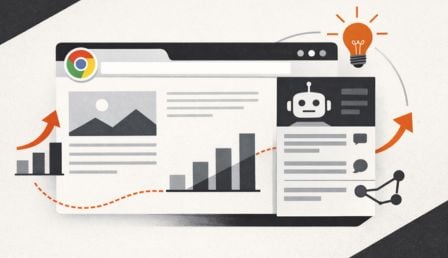
Google launches major update to Chrome with Gemini 3
- Chrome gets a major AI upgrade with Gemini 3 built in: A persistent side panel helps users summarise content, compare options and multitask without leaving the current tab.
- “Auto Browse” is the standout feature: Available initially to Google AI Pro and Ultra subscribers, it lets Gemini actively browse the web to complete multi-step tasks like research, bookings and online shopping.
- Gemini can act across text and images: The AI can recognise products from images, find deals, apply budgets and even add items to carts, making shopping and discovery more seamless.
- User control and transparency are baked in: Gemini pauses for confirmation before sensitive actions (like purchases or posting) and clearly shows what it’s doing at each step.
- Big productivity implications for everyday tasks: Early use cases include managing bills, subscriptions and admin-heavy chores, cutting down time spent manually browsing.
- Read more
AI in digital
Platforms
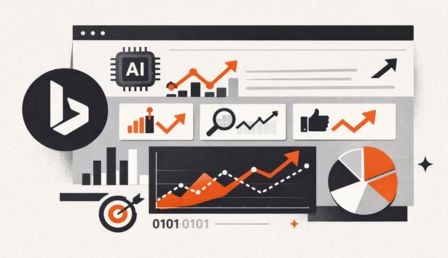
Bing tests AI Performance report in Webmaster Tools
- Bing is testing an AI Performance report inside Bing Webmaster Tools that shows how often your content is cited in AI-powered results like Microsoft Copilot and partner platforms — effectively giving a first look at AI visibility beyond traditional SEO metrics.
- Key metrics include AI citations by day, number of pages cited, grounding queries (how Bing interprets the user’s intent) and a breakdown of query intent types (informational, navigational, etc.).
- Important limitation: the report does not currently include click or CTR data from those AI citations, so you can’t yet measure real visitor traffic or engagement coming from AI answers.
- This feature is in super-limited beta and hasn’t been formally announced by Microsoft, meaning access is restricted and timelines are unclear.
- Why it matters: as AI-generated search results grow in prominence, this begins to give SEO teams a way to track visibility in generative experiences, even if traffic attribution isn’t there yet — hinting at future shifts in optimisation strategy.
- Read more
AI in digital
Platforms
It’s official. Ads coming soon to ChatGPT
- Ads coming soon in ChatGPT — OpenAI plans to start testing advertising in the U.S. on ChatGPT’s free tier and the new low‑cost ChatGPT Go tier to help broaden access to the AI.
- Ads will be kept separate & transparent — Ads are clearly labelled, placed below responses, and won’t influence the AI’s answers or be mixed in with the content users ask for.
- User privacy & control emphasised — Conversations won’t be shared with advertisers, personal data won’t be sold, and users can turn off ad personalisation or clear data used for ads.
- Ad‑free paid options remain — Premium tiers like Plus, Pro, Business and Enterprise will stay ad‑free, giving marketers clarity about who will see ads.
- Goal is broader access and trust — OpenAI frames this ad strategy as a way to make powerful AI more affordable and accessible while protecting user trust and product quality.
- Read more
AI in digital
Platforms
Apple partners with Google Gemini to power Siri
- Apple inks multi‑year partnership with Google to power next‑gen Siri by using Google’s Gemini AI models and cloud infrastructure as the backbone for future Apple Intelligence features, including a revamped Siri expected later this year.
- Gemini chosen after careful evaluation — Apple says Google’s AI offers the “most capable foundation” for its AI ambitions, aiming to turn Siri into a more capable AI answer engine than the current version.
- Rollout later in 2026 — the upgraded Siri, with deeper AI capabilities, should begin rolling out this year as part of Apple’s broader AI strategy.
- Apple still keeping privacy front and centre — though Google’s cloud and models power the tech, Apple Intelligence will continue running on Apple devices and Apple’s Private Cloud Compute to safeguard user data.
- Strategic context — this move comes amid delays and scrutiny of Apple’s AI efforts and positions Siri to better compete with rivals like ChatGPT‑powered assistants.
- Read more
Platforms
Google Ads launches Campaign Total Budgets
- Campaign total budgets let you set a fixed spend for the entire campaign duration, automatically adjusting daily spend to hit your target without going over.
- It’s only available for new campaigns and can’t be switched mid-way from average daily budgets.
- You must set a start and end date (3–90 days, or up to 1 year for some formats) – this is ideal for time-bound promotions or events.
- Supported across all major campaign types including Performance Max, Search, Shopping, Demand Gen and YouTube with various bidding strategies.
- Frequent changes to budget or timing can disrupt performance; set your parameters upfront and minimise tweaks for best results.
- Read more
No results found.
